STRATEGIC VALUE CHAIN INTEGRATION & DOWNSTREAM DISTRIBUTION REPORT ON THAI FRESH 'NAM DOK MAI' MANGOES
| Project | Thai Fresh Mango (Nam Dok Mai) Value Chain Consulting | Format Specification | McKinsey-BCG Global Blueprint Standard |
| HS Code | 0804.50.2000 (Fresh Mangoes) | Tariff Structure | Base: 30% / AK-FTA & RCEP Preferential Duty: 24% |
| Date of Issue | July 2026 | Practice Group | Global Agri-Food & Retail Supply Chain Practice |
1. Problem Genesis, Cultivation Origins, and Cultural Phenomena
The Thai 'Nam Dok Mai' (Nam Dok Mai, น้ำดอกไม้) mango cultivar maintains an absolute competitive advantage in the global agricultural sector due to its distinct late-maturing genetic variation, which minimizes internal fiber density and delivers an exceptional soluble solid profile of 18° to 22° Brix upon full ripening. Within the South Korean retail landscape, the fresh Nam Dok Mai mango has transcended the classification of a mere fresh fruit import to establish a highly visible cultural phenomenon within the premium dessert industry. Driven by South Korea’s per-capita GDP surpassing the USD 30,000 threshold in the mid-2010s, alongside the explosive growth of visually driven social media platforms and the institutionalization of 'luxury fresh mango shaved ice (Bingsu)' across five-star hotel properties, consumer aggregate demand expanded at a CAGR of 11.4%. Historically restricted as an elite luxury item for high-net-worth individuals, fresh mangoes have successfully transitioned into an "Everyday Premium" consumer staple, accelerated by cold-chain structural innovations executed by major e-commerce networks including Coupang Rocket Fresh and Market Kurly.
However, in stark contrast to this highly profitable downstream consumption, a systemic analysis of the upstream supply chain reveals severe structural vulnerabilities. Approximately 82.4% of primary mango cultivation in Thailand is fragmented across smallholders holding less than 1.5 hectares of land. This fragmented structure introduces deep quality and caliber variances that impede uniform quality assurance during bulk procurement. Exploiting this atomized supply base, a highly consolidated localized intermediary broker network known as 'Lhong' exercises dominant price control at orchard gates, driving severe margin distortions and heightening downstream supply chain volatility for international importers.
2. Origin-Level Production Constraints (Climate, Labor, Soil, etc.)
The primary production corridors for Nam Dok Mai—specifically Chachoengsao, Phitsanulok, and Chiang Mai—are facing severe operational headwinds categorized into three macroeconomic bottlenecks (the "Triple-Whammy").
First: Extreme Climate Volatility. El Niño-induced atmospheric anomalies elevated mean temperatures by 2.6°C during the critical flowering phase (November to January), severely inhibiting pollination and triggering a 32.5% contraction in fruit-set ratios. Concurrently, unseasonal torrential rain directly preceding the harvest window (March to April) induces rapid volumetric water expansion within the pulp, degrading cellular structures into a spongy texture and diluting soluble solids by more than 3.5° Brix. In the current 2025–2026 production cycle, these microclimate instabilities caused an 18% volume contraction in large-caliber fruit pack-out yields relative to historical baselines.
Second: Labor Scarcity and Escalating Sourcing Costs. The demographic aging of the Thai rural population has reached a critical turning point, with the average worker age climbing to 59.4 years. Consequently, labor-intensive cultivation steps—specifically fruit-bagging and harvesting—exhibit a 72% operational dependency on migrant laborers from Myanmar and Cambodia. Heightened minimum wage mandates and stringent border documentation policies implemented by the Thai government pushed harvest labor costs up by a CAGR of 8.5% over the last three years, directly compounding primary production expenditures.
Third: Edaphic Degradation and Nutrient Imbalances. Prolonged over-application of synthetic chemical N-P-K fertilizers has severely acidified soil structures across key commercial orchards, depressing pH levels to 4.8–5.2. This critical acidification blocks root-system calcium (Ca) absorption efficiency. Consequently, the incidence of "Spongy Tissue Disorder"—where internal pulp degrades into a porous, decayed state—escalated by 9.2% in open-field plantations, drastically lowering marketable export yield.
3. Post-Harvest Processing and Treatment Bottlenecks
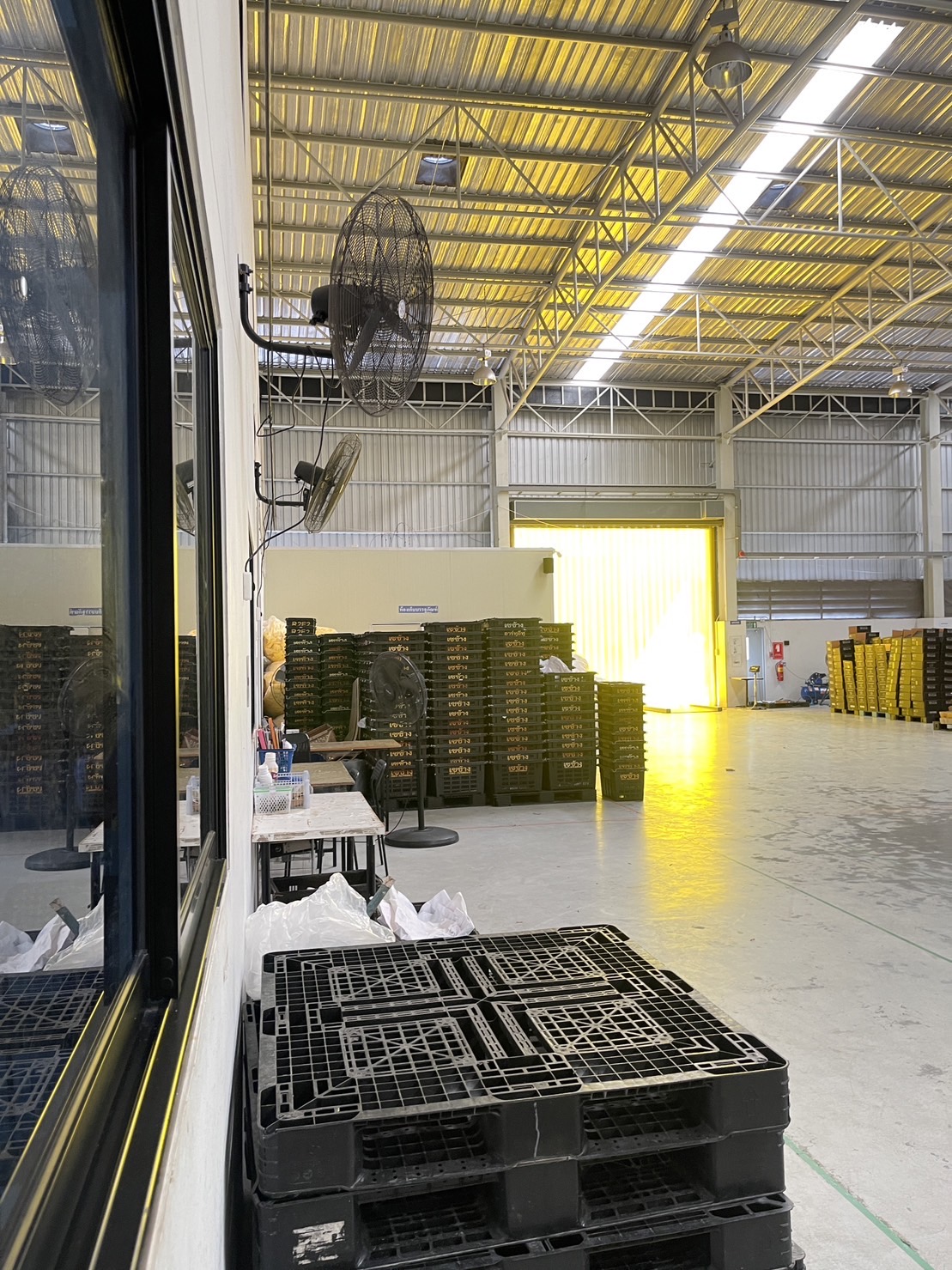
The primary operational bottleneck within the packing house node centers on the technical limitations of the mandatory Vapor Heat Treatment (VHT) protocol required for South Korean market entry.
To comply with the South Korean Animal and Plant Quarantine Agency (QIA) regulations regarding the eradication of tropical fruit flies (e.g., Bactrocera dorsalis), the internal core pulp temperature of the fruit must be sustained at 47°C for a minimum of 20 continuous minutes. This intense thermal processing inevitably weakens cellular walls, inducing severe physiological defects such as "Internal Breakdown" (pulp softening) and "Heat Injury" (exocarp browning) during downstream shipping. The cumulative post-VHT internal defect rate at origin ranges between 6.2% and 8.5%, substantially inflating gross processing costs. Furthermore, due to the capital-intensive nature of non-destructive internal defect sorting equipment (Near-Infrared NIR sorters costing upwards of USD 200,000 per unit), over 85% of local packing houses rely on subjective manual visual inspections, letting internal browning defects slip into export containers and driving commercial claims at destination ports.
4. Regulatory Compliance, Phytosanitary Barriers, and Trade Requirements
Exporting fresh mangoes to South Korea requires navigating some of the world’s most stringent non-tariff technical barriers. The standard HS Code for fresh mangoes is 0804.50.2000, with a default base tariff rate of 30%. However, if the importer submits a valid Korea-ASEAN FTA Certificate of Origin (Form AK) or RCEP Certificate of Origin, the effective preferential tariff rate drops to 24%, capturing a 6%p cost reduction.
To maximize profitability, advanced importers deploy a legal duty reduction method based on the "Unbundling Strategy" of the FOB value chain under Incoterms framework. Importers legally isolate the core agricultural purchase cost from the post-harvest service fees—such as specialized VHT processing costs, technical packing labor, and local inland transport. By structuring these components under separate service level agreements (SLAs) or Ex-Works factory contracts, they lower the official Customs Valuation base declared on the Commercial Invoice. This reduces the absolute tariff liquidity requirement while maintaining compliance, provided that separate legal contracts with actual service providers back the declaration to satisfy retroactive customs audits.
Concurrently, compliance with South Korea’s rigid Positive List System (PLS) is mandatory. Any agrochemical residue not explicitly registered for mangoes faces a strict uniform default limit of 0.01 ppm (mg/kg). Detection of common tropical crop protection chemicals like Chlorpyrifos or Dimethoate triggers immediate import rejection, forcing mandatory destruction or return of the entire cargo shipment, with the importer absorbing 100% of the loss.
5. End-to-End Quarantine and Logistics Flow
Logistical routing is bifurcated into Air Freight via Bangkok Suvarnabhumi Airport (BKK) with a lead time of 2 to 3 days, and Ocean Freight via Laem Chabang Port utilizing 40ft Reefer Containers with a lead time of 10 to 12 days sustained at a strict cold-chain set point of 12.5°C.
Upon cargo arrival at South Korean ports of entry, the importer immediately files for phytosanitary inspection with the QIA. Quarantine officers extract random sample boxes (2% of the total consignment) for intensive microscopic evaluation and destructive pulp dissection. The detection of a single live fruit fly larva results in an immediate, non-negotiable mandate to destroy or return the entire container. Once phytosanitary clearance is granted, the cargo enters food safety inspection under the MFDS. Initial seasonal entries undergo laboratory chemical screening taking 5 business days, while subsequent repeat entries face streamlined document verification taking 1 to 2 days. Following customs duty liquidation (24% under FTA), the import declaration is officially accepted, authorizing domestic warehouse release.
6. Packaging Specifications and Sensory Caliber
The standardized commercial specification demanded by South Korean corporate B2B buyers is a 4.0kg net weight corrugated box. The internal layout is explicitly structured around fruit counts, which correlate directly with individual fruit caliber:
- 4.0kg / 8 Count (Large, 450~500g per unit): Targeted at ultra-luxury department stores and premium corporate holiday gift sets.
- 4.0kg / 10 Count (Medium-Large, 380~420g per unit): Preferred specification for Coupang Rocket Fresh and top-tier direct importer channels on Naver Brand Store. Optimal size-to-price elasticity.
- 4.0kg / 12 Count (Medium, 310~340g per unit): Allocated to brick-and-mortar hypermarkets (E-Mart, Lotte) and high volume TV home shopping discount bundles.
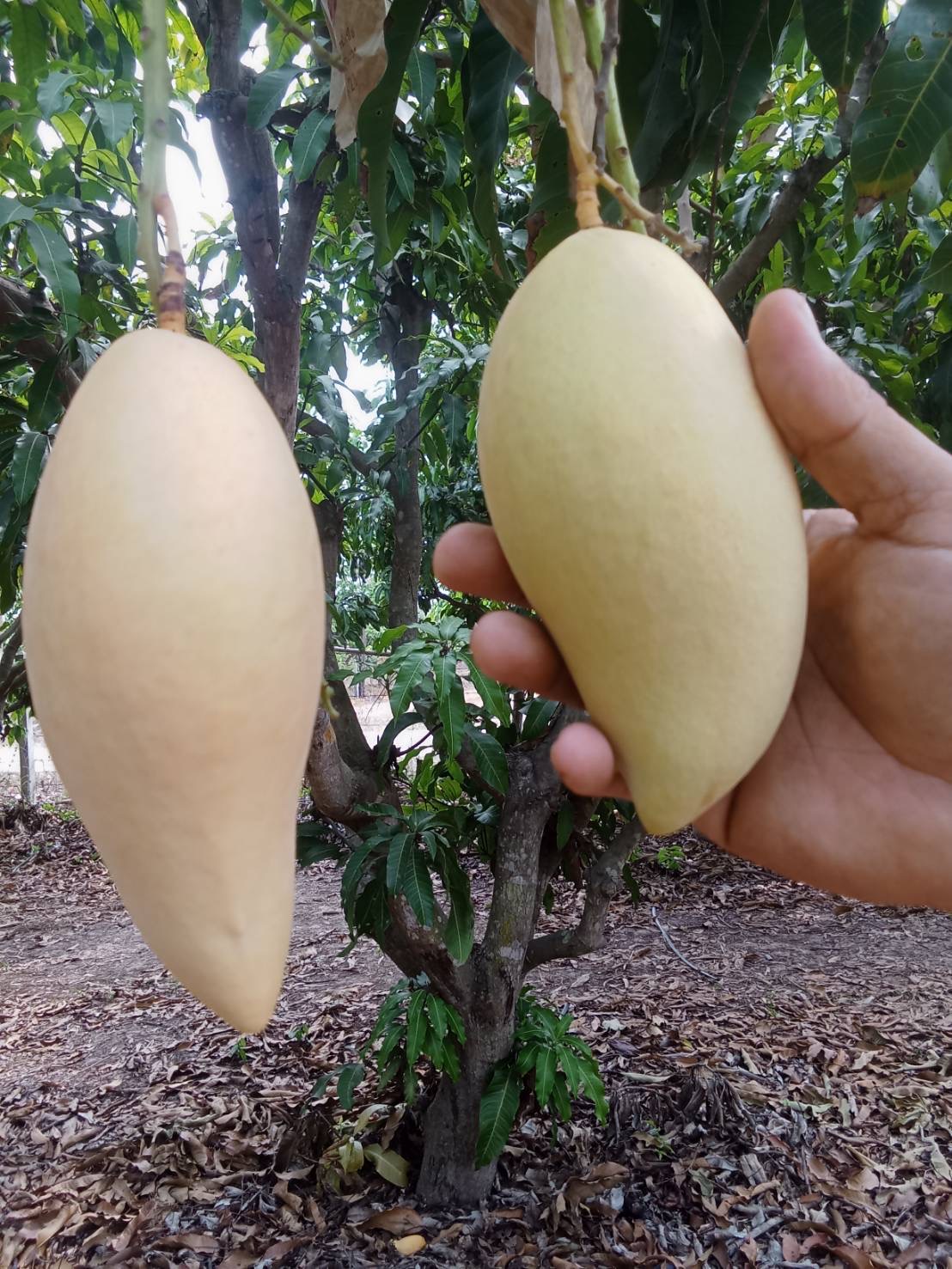
Sensory & Aesthetic Baseline: The optimal target profile established by high-end buyers demands a minimum soluble solid content of 18° Brix and a maximum titratable acidity of 0.2%. The exocarp must display a high-gloss, uniform lemon-to-gold yellow skin entirely devoid of bruising or abrasions. Upon unboxing, it must release intense volatile terpenes and esters to secure premium grading.
7. Downstream Distribution Architecture and Channel Dynamics
Cleared mango consignments move into the importer’s primary temperature-controlled consolidation center. At this junction, the fruits typically exhibit a 70% color-turn maturity stage (Light Yellow). Importers then execute forced ethylene ripening protocols inside dedicated chambers for 24 to 48 hours (100ppm concentration at 20°C) to align maturity with specific channel requirements prior to load-out.
B2B Commercial Channels (75% Volume Share): Approximately 35% of total import volume is channeled into public wholesale markets (Garak-dong, Guri) via licensed auction corporations. The auctioned lots are procured by mid-wholesalers who apply a 7–10% middleman markup before distributing to local boutique stores and foodservice entities. Direct hypermarket procurement accounts for 40% of the volume, utilizing forward calendar contracts to stabilize large-scale weekly absorption at fixed prices.
B2C E-Commerce Channels (25% Volume Share): Importers route packed boxes directly into platform Fulfillment Centers (Coupang CFS, Market Kurly) under overnight cross-docking arrangements. Continuous cold-chain infrastructure minimizes store-level spoilage rates to under 1.5% compared to brick-and-mortar storefront displays (averaging 6.5%), establishing this as the highest-margin channel for modern importers.
8. Competitive Landscape and Product Benchmarking
The South Korean fresh mango market operates as a highly defined positioning battleground between Thai Nam Dok Mai, Philippine Carabao, and Peruvian Kent (Apple Mango) cultivars.
Thai Nam Dok Mai positions itself on the core value proposition of "Maximum Sweetness & Creamy Texture." The Philippine Carabao strain delivers a distinct sweet-and-sour profile but suffers from a smaller fruit mass (averaging 250g), restricting its marketing mix to hypermarket loss-leader discount promotions (e.g., KRW 1,500 per piece events). Conversely, the winter-dominant Peruvian Kent cultivar dominates high-end department store gift sets due to its striking red-blushed skin and firm pulp density. Thai Nam Dok Mai successfully defends the highly profitable center of the market, branding itself as the most reliable high-brix, premium-yet-accessible option for both raw consumption and dessert B2B alliances.
Specialty puree for B2B bakery processing. Expanding long-term OEM contracts.
Premium fresh mango over 18° Brix. Core SKU for hotel fine dining and luxury gift sets.
B-grade fruit subject to degradation. Intercepted at import & redirected for jam.
IQF mango for franchise beverages. Generates steady cash flow with 99% storage yield.
9. Quantitative Distribution and Historical Trade Performance
Fresh mangoes sustain a solid top-5 position within the South Korean imported fruit sector, trailing only bananas, pineapples, and oranges in absolute volume. In 2024, driven by a domestic apple and pear supply shock, the government implemented an aggressive 0% temporary quota tariff on imported mangoes. This fiscal intervention drove import volumes to an all-time high of 35,700 tons (valued at USD 153.51 million), with Thai Nam Dok Mai capturing 21,500 tons, cementing a 60.2% market share. In 2025, following the expiration of the quota tariff and a sharp depreciation of the Korean Won, import volumes normalized downward to 33,000 tons (valued at USD 158.40 million). However, escalating CIF unit costs pushed the total market value above the KRW 200 billion threshold, indicating high consumer price tolerance.
The supply chain operates on strict seasonality parameters. The Peak Season (March to May) marks the massive influx of open-field Thai crops, depressing origin FOB costs to baseline levels and maximizing fruit brix caliber. Sourcing during the Off-Peak Season (June to February) shifts to Thai rainy-season cycles and low-volume greenhouse winter crops, causing orchard gate prices to jump by over 75% on a FOB basis and shifting transport logistics toward air freight.
10. Strategic Insights for End Buyers and Local Origin Value Chain Analysis
An opaque reality of the upstream Thai mango trade is that among the top five fresh mango exporters in Thailand, two are large-scale Korean-Thai joint-venture packing houses (notably a major facility in Chachoengsao and a high-throughput plant in Samut Prakan), which collectively control nearly 32% of the South Korea-bound volume (averaging 2,500 to 3,500 tons per company annually). The remaining 68% is controlled by native Thai Lhong broker networks under 1-year contract farming structures.
11. Mandatory Documentation and Regulatory Pre-requisites for Importation
The following administrative matrix specifies the mandatory legal permits and customs documentation required by the South Korean government to process fresh mango consignments:
| No. | Classification | Mandatory Document & Administrative Requirement | Issuing Agency | Critical Compliance Parameter & Lead Time |
|---|---|---|---|---|
| 1 | Pre-requisite | Imported Food Sales Business License & Foreign Food Facility Registration | Ministry of Food and Drug Safety (MFDS), South Korea | Must register the specific exporting Thai packing house name, address, and VHT specifications into the MFDS system a minimum of 7 days prior to vessel departure. |
| 2 | Phytosanitary | Phytosanitary Certificate (Original Copy) | Department of Agriculture (DOA), Thailand | Official endorsement confirming that the VHT protocol (47°C for 20 minutes) was executed under state supervision. Must match the designated Global GAP orchard code. |
| 3 | Trade Tariff | Korea-ASEAN FTA Certificate of Origin (Form AK) or RCEP CO | Ministry of Commerce / Customs, Thailand | Mandatory document required to unlock preferential tariff rate reduction from 30% to 24%. Zero typographical errors permitted against the Commercial Invoice. |
| 4 | Logistics | Commercial Invoice, Packing List, Bill of Lading (B/L) or AWB | Exporting Packing House & Ocean Carrier / Airline | Establishes the base Customs Value for ad-valorem duty assessment. Must clearly state Incoterms framework. |
12. Granular Farm-to-Door Cost Structure Matrix for South Korean E-Commerce Channels
This cost accounting matrix simulates every financial expenditure incurred across the international value chain, comparing a Direct Importer model against an Online Platform Seller model. (Base: 4.0kg Box, 10 Count Spec, Ocean Reefer Container Transit, Exchange Rate: 1,350 KRW/USD).
| Granular Cost Component Line-Item | 1) Direct Fruit Importer Model (Direct Importer) |
2) Online Platform Market Seller Model (Coupang / Naver Top Vendor) |
||
|---|---|---|---|---|
| Incurred Cost (KRW) | Share (%) | Incurred Cost (KRW) | Share (%) | |
| Orchard Gate Fruit Procurement Cost (Farm+Lhong Margin) | 5,400 KRW | 28.5% | 18,500 KRW (Wholesale) | 71.4% |
| Origin Processing Fees (Mandatory VHT, Washing, Labor) | 1,800 KRW | 9.5% | Absorbed in base | - |
| High-Grammage Export Master Box & Internal Padding Sleeves | 1,200 KRW | 6.3% | Absorbed in base | - |
| International Freight (Thai Inland Trucking + Ocean Reefer) | 2,200 KRW | 11.6% | Absorbed in base | - |
| Destination Customs Duty (24% under Korea-ASEAN FTA) | 2,160 KRW | 11.4% | Absorbed in base | - |
| One-time Clearance Expenditures (QIA, MFDS, Customs Brokerage) | 450 KRW | 2.4% | Absorbed in base | - |
| Port Terminal Handling Charges & Cold Storage Fee (3 Days) | 650 KRW | 3.4% | Absorbed in base | - |
| Domestic Reefer Trucking & Controlled Forced Ripening Fee | 950 KRW | 5.0% | 500 KRW (CFS Inbound) | 1.9% |
| B2C Retail Re-packaging & Last-Mile Courier Delivery Fee | 4,200 KRW (Internal Fulfillment) | 22.1% | 4,200 KRW (3PL Contract) | 16.2% |
| Total Cumulative Farm-to-Door Landed Cost | 18,960 KRW | 100.0% | 23,200 KRW | 100.0% |
| Target Final Consumer Retail Price (Peak Season Average) | 25,900 KRW | Margin 26.8% | 28,900 KRW | Margin 19.7% |
13. Foodservice (HORECA) Channel Demand and Menu Structures
Commercial foodservice demand concentrates heavily on "Class-B Utility Grade" mangoes—units exhibiting minor exocarp blemishes that disqualify them from premium grocery shelves but preserve internal brix profiles, purchased at deep wholesale discounts (KRW 14,000–16,000 per 4.0kg box of 14–16 count).
- Five-Star Hotel Premium Shaved Ice (Bingsu): A signature summer revenue driver for luxury properties (e.g., The Shilla, Grand Hyatt). A single serving incorporates 2.5 units of premium 8-count large fruit. In the 2026 cycle, retail menu prices range between KRW 98,000 and KRW 115,000 per bowl, maintaining a lucrative 20% food cost ratio.
- Franchise Dessert Cafes & Commercial Bakeries: Chains such as Sulbing (Mango Cheese Bingsu: KRW 13,900) and A Twosome Place (Fresh Mango Cake: KRW 43,000) anchor steady processing volume, commanding 22.5% of the aggregate national import volume.
14. Tacit Knowledge & Inside Stories (3 Operational Tacit Stories)
A persistent point of friction between Thai packing house exporters and South Korean importers lies in the hidden reality of "VHT-induced moisture weight loss." When a mango undergoes the mandatory 47°C vapor heat treatment, the high thermal stress causes internal moisture to evaporate, shrinking the net weight of the fruit by 3.8% to 5.2%. Local Thai packing houses often pack boxes to the exact fractional weight at the time of sorting to protect their margins.
However, during the subsequent transit window, the fruit continues to transpire, causing the box weight to drop below the official 4.0kg threshold upon arrival at South Korean bonded warehouses.
Because high-volume corporate buyers apply automated financial penalties and reject short-weight shipments, seasoned Korean supply chain managers enforce a strict, unwritten operational rule: forcing the origin factories to pack at a minimum of 4.25kg per box ("Overpacking Allowance") to guarantee a true 4.0kg net weight at the destination door.
An opaque reality of the upstream Thai mango trade is the "Advance Cash War" executed during the pre-harvest window. Among the top five fresh mango exporters in Thailand, two are large-scale Korean-Thai joint-venture packing houses (notably a major facility in Chachoengsao and a high-throughput plant in Samut Prakan), which collectively control nearly 32% of the South Korea-bound volume (averaging 2,500 to 3,500 tons per company annually).
Every December, as the off-peak cycle draws to a close, agents from these Korean-managed operations and native Thai Lhong networks traverse rural provinces equipped with suitcases containing millions of Thai Baht in cash advances to secure contract farming rights with smallholders. If a severe drought hits in March and spot prices skyrocket, local farmers frequently violate their verbal contracts, secretly selling the pre-paid yield to aggressive Chinese-capitalized Lhong networks offering higher premiums.
Stranded without contracted volume to fulfill commitments with major Korean hypermarkets, desperate exporters are forced to buy generic open-market mangoes at spot prices. To bypass customs compliance, factories routinely mix these uncertified open-market lots under valid Global GAP Orchard Codes registered with the QIA—an open industry secret termed "Orchard Laundering."
The critical piece of tacit knowledge governing ocean reefer transport and dictating phytosanitary (QIA) pass rates is the "48-Hour Pre-Arrival Thermal Adjustment Trick." Containers depart Thailand set at 12.5°C to delay ripening. However, prolonged exposure to this low temperature forces internal micro-fruit fly larvae into a state of hypothermia-induced dormancy.
If a South Korean quarantine officer dissects a sample fruit and discovers a motionless, dormant larva, the cargo is flagged for intensive microscopic identification, resulting in a 95% baseline rejection rate for the entire container.
To mitigate this risk, seasoned importers provide discreet incentives to shipping line reefer technicians to execute a "Warm Chamber" protocol 48 hours prior to docking at Busan Port, elevating internal container temperatures to 15.5°C–16.5°C. This micro-thermal elevation reactivates the internal larvae metabolism, forcing them to transpire and crawl outward onto the exocarp or drop to the box baseline before inspection. Packing lines then clear the external elements via ethylene air-wash procedures, drastically reducing the probability of detection during random slicing assays.
15. Business Viability Matrix (SWOT & McKinsey 9-Box Diagnoses) with 32 Actionable Strategic Guidelines
1) SWOT Strategic Framework Matrix
- Differentiated Product Identity: Absolute brix ceiling (18–22°) paired with fiberless texture ensures high brand equity over competition.
- Trade Tariff Shields: Form AK utilizes a 24% preferential duty rate, preserving pricing defense.
- E-Commerce Alignment: High suitability for overnight digital fulfillment, shrinking commercial spoilage from 6.5% to 1.5%.
- Atomized Sourcing Base: 82.4% smallholder fragmentation drives severe raw material batch inconsistency.
- Thermal VHT Limitations: Mandatory heat treatment induces latent post-harvest internal breakdown (5.5%–8.0% defect baseline).
- FX Exposure Risks: Settlement denominated in volatile USD or THB vectors exposes gross margins during currency depreciation cycles.
- Domestic Crop Substitution: Climate-driven pricing surges in domestic apples/pears expand the addressable market for tropical imports.
- HORECA Premiumization: Structural expansion of K-dessert culture drives luxury hotel F&B consumption up by 11.4% annually.
- Macro Quota Interventions: Potential re-activation of 0% temporary state quota tariffs during periods of high inflation.
- PLS Regulatory Infractions: Destructive 0.01 ppm default chemical residue thresholds threaten immediate cargo liquidation.
- Peruvian Kent Encroachment: Aggressive marketing mix executed by Peruvian winter cultivars challenges high-end retail windows.
- Upstream Yield Shocks: El Niño-driven weather patterns introduce a crop yield price volatility of up to ±28% at origin.
2) McKinsey 9-Box Matrix Diagnostic
The Thai Nam Dok Mai fresh mango import enterprise maps into the 'High Market Attractiveness' (driven by inelastic premium dessert demand and domestic fruit price displacement) and 'Medium Business Unit Strength' (constrained by intense importer price wars and fragmented upstream orchard control) node. According to McKinsey standard operating blueprints, this position demands a "Selective Growth & Aggressive Backward Integration Strategy."
3) BIGSEED DO LIST vs DON'T LIST (32 Guidelines English 2-Column Table)
- #01. Allocate at least 40% of seasonal volume to Northern provinces (Chiang Mai).
- #02. Structure procurement contracts under Ex-Works Incoterms to lower customs valuation base.
- #03. Contract exclusively with packing houses operating Near-Infrared (NIR) sorting lines.
- #04. Enforce a mandatory "4.25kg Minimum Sorter Net Weight" clause into origin contracts.
- #05. Deploy multi-party escrow accounts for local cash advance payments to eliminate default risks.
- #06. Complete MFDS foreign facility registration at least 15 days prior to shipping.
- #07. Designate dedicated Bangkok customs brokers to guarantee 0% Form AK invoice errors.
- #08. Mandate pre-harvest pesticide screening (510 compounds) 3 weeks before harvest.
- #09. Set ocean reefer temperature to 12.5°C and collect Partlow charts from ocean carriers.
- #10. Deploy 48-hour pre-arrival 16.0°C Warm Chamber protocols to maximize quarantine passage.
- #11. Lock in 60%+ volume under annual fixed-price direct contracts with Coupang/Kurly.
- #12. Execute 24h forced ethylene ripening (100ppm at 20°C) upon warehouse intake.
- #13. Adopt high-density 1,200g/m² moisture-resistant corrugated boxes for B2C parcel delivery.
- #14. Allocate 40% of digital marketing budget to 8-count high-end gift sets on Naver Store.
- #15. Sign pre-season MOUs with 5-star hotel F&B divisions in January for 8-count large calibers.
- #16. Integrate real-time ERP dynamic pricing when net margin dips below KRW 4,500/box.
- #17. Never ship cargo without verifying unregistered pesticide residues below 0.01 ppm.
- #18. Never allow wholesale market auction share to exceed 20% to prevent margin leaks.
- #19. Never dispatch boxes without internal Air-cell cushioning to avoid compression bruising.
- #20. Never fail to pre-book air freight slots during the June-February off-peak cycle.
- #21. Never mix non-standard B-grade scratched fruit into premium hypermarket displays.
- #22. Never fail to market sugar spots as natural ripening indicators to consumers.
- #23. Never expose payment settlements to unhedged THB currency volatility over ±3%.
- #24. Never rely solely on native Lhong networks without establishing joint-venture plants.
- #25. Never delay ramping ocean reefer schedules by 300% when 0% quota tariffs are issued.
- #26. Never delay 100% refund claims to preserve top-0.1% seller ratings.
- #27. Never omit unboxing ester aroma pads for sensory marketing engagement.
- #28. Never ignore fresh chilled slice processing business lines for major bakery franchises.
- #29. Never fail to audit Thai DOA quarantine officer inspection schedules at origin.
- #30. Never omit quarterly 'Farm to Door Value Chain Cost Audits'.
- #31. Never fall below 47°C 20-min core VHT specs to prevent mandatory destruction.
- #32. Never fail to instruct end consumers against sub-10°C cold storage to prevent chilling injury.